

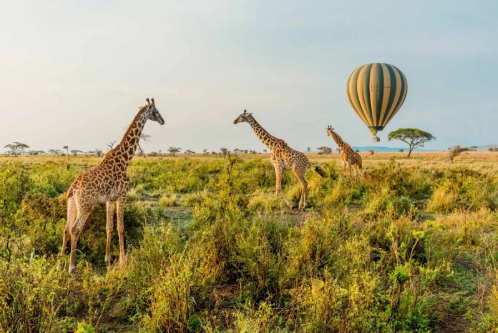

Africa’s wild heart beats strongest in Tanzania, where nature’s grandest spectacles unfold across landscapes that have witnessed the drama of survival for millions of years. This remarkable East African nation offers safari experiences that transcend mere wildlife viewing, immersing visitors in ecosystems where the circle of life continues its eternal dance. For those seeking authentic encounters with wild Africa, Tanzania stands unrivaled as the ultimate destination.
Tanzania’s Wildlife Heritage
The Tanzanian landscape tells a story of geological forces, evolutionary processes, and conservation commitment that spans eons. Covering nearly one million square kilometers, this nation has dedicated over 300,000 square kilometers to wildlife protection through an intricate system of national parks, conservation areas, game reserves, and marine sanctuaries. This represents one of Earth’s largest commitments to preserving natural heritage.
What makes safari in Africa Tanzania exceptional isn’t simply the quantity of protected land but the quality of wilderness these areas preserve. Here, ecological processes continue largely uninterrupted by human interference. Predators hunt according to instinct honed over millennia, herbivores migrate following rainfall patterns established long before recorded history, and complex interdependencies between species maintain balance in ways that showcase nature’s intricate design.
Tanzania hosts populations of wildlife that stagger the imagination—over 150,000 Serengeti wildebeest born in a single three-week period each year, elephant concentrations that number in the thousands at single waterholes, lion prides controlling territories larger than some small countries. These statistics, impressive as they are, fail to capture the profound emotional impact of witnessing these animals thriving in their natural habitats, behaving as evolution designed them to behave.
Serengeti National Park: The Endless Migration
No discussion of safari in Africa Tanzania can begin anywhere except the Serengeti, a name that resonates globally as the epitome of African wilderness. This protected ecosystem spans approximately 14,750 square kilometers of predominantly grassland savannah, though this simple description barely hints at the ecological complexity within these boundaries. The Serengeti functions as the centerpiece of a larger 30,000-square-kilometer ecosystem extending into Kenya’s Masai Mara.
The Great Migration defines the Serengeti for many visitors, and this phenomenon justifies its legendary status. Each year, approximately 1.5 million wildebeest, accompanied by 200,000 zebras and 400,000 Thomson’s gazelles, undertake a circular journey through the ecosystem. This isn’t migration in the traditional sense of movement between summer and winter ranges, but rather a continuous movement following the rains and the fresh grazing they produce.
The migration calendar follows predictable patterns though exact timing varies annually based on rainfall. December through March finds herds in the southern Serengeti plains where nutrient-rich grasses stimulated by short rains provide optimal conditions for the synchronized calving season. During these weeks, approximately 8,000 calves are born daily, creating a bonanza for predators that includes lions, leopards, cheetahs, hyenas, and even opportunistic jackals and vultures.
As the southern plains dry during April and May, herds begin moving northwest toward the Western Corridor and the Grumeti River. June and July bring the first major river crossings as animals ford crocodile-infested waters in their desperate push toward northern grazing areas. August through October witnesses the most dramatic crossings at the Mara River in the northern Serengeti, where steep banks and swift currents create chaos as thousands of animals plunge simultaneously into treacherous waters.
Beyond the migration, the Serengeti maintains resident wildlife populations of extraordinary richness. The park supports approximately 3,000 lions—Earth’s largest remaining wild lion population—organized into prides that exhibit fascinating social structures and hunting strategies. Individual prides maintain territories for years or even decades, with pride membership passing matrilineally through female lineages while young males are expelled to form nomadic coalitions seeking their own territories.
Leopards inhabit the Serengeti’s kopje and riverine woodlands, their solitary existence and primarily nocturnal habits making encounters special events that require both luck and timing. Cheetahs exploit the open plains, relying on exceptional eyesight to spot prey from great distances before launching pursuits that showcase Earth’s fastest land animal reaching speeds exceeding 110 kilometers per hour. Spotted hyenas, operating in complex social clans led by dominant females, hunt cooperatively and scavenge opportunistically, playing crucial roles in ecosystem functioning.
Ngorongoro: Evolution’s Laboratory
The Ngorongoro Conservation Area represents a unique approach to African conservation by integrating wildlife protection with sustainable human land use. This 8,292-square-kilometer area encompasses the famous crater alongside other significant features including Olduvai Gorge, where some of humanity’s oldest ancestors left their traces, and the Ngorongoro Highlands that provide critical water catchment for surrounding regions.
The Ngorongoro Crater itself formed approximately 2.5 million years ago when a volcanic mountain, possibly exceeding Kilimanjaro’s current height, experienced catastrophic collapse following massive eruptions. The resulting caldera measures approximately 20 kilometers across with a floor area of 260 square kilometers surrounded by walls rising 400-600 meters above the flatlands. This geological feature creates a natural enclosure that functions as a largely self-contained ecosystem.
The crater floor supports approximately 25,000 large mammals in permanent residence, creating wildlife densities found nowhere else in Africa. The ecosystem’s self-sufficiency stems from permanent water sources fed by highland springs, rich volcanic soils that sustain lush grazing year-round, and the crater walls that create both physical boundaries and unique microclimates. Morning fog often blankets the crater floor before burning off to reveal the remarkable diversity below.
Black rhinoceros populations in Ngorongoro represent a conservation success story within Tanzania’s broader struggles to protect these critically endangered animals. The crater maintains approximately 30 black rhinos, their relatively protected status within the natural enclosure making them more secure than populations in open ecosystems. While rhino numbers remain insufficient to guarantee sightings, visitors spending full days in the crater frequently encounter these magnificent animals, often at remarkably close range as they graze openly across the grasslands.
The crater’s lion population has developed unique genetic signatures resulting from their relative isolation within the caldera. These lions have adapted to the crater’s specific conditions, with pride territories often centered on the few scattered acacia trees that provide shade and den sites. Large buffalo herds, sometimes numbering in the hundreds, graze the lush grasses while hippo pods occupy permanent pools. Lake Magadi, a shallow alkaline lake covering much of the crater floor during wet periods, attracts variable numbers of flamingos whose pink masses create striking contrasts against the surrounding landscape.
Tarangire National Park: River of Life
Tarangire National Park demonstrates how African ecosystems transform seasonally in response to rainfall patterns that govern all life. Covering approximately 2,850 square kilometers, Tarangire appears pleasant but unremarkable during the November-May wet season when water availability spreads across the broader landscape. However, the June-October dry season witnesses dramatic transformation as the Tarangire River becomes a critical lifeline.
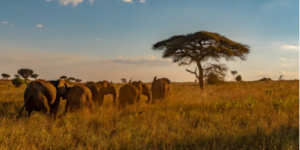
As surrounding seasonal water sources evaporate and grazing depletes, wildlife converges on Tarangire in extraordinary numbers. The park becomes renowned for elephant encounters during these months, with aggregations reaching populations that rival anywhere on Earth. Daily sightings of herds numbering 200-300 individuals become commonplace as family groups gather along the riverbanks and remaining waterholes.
These elephant concentrations provide unparalleled opportunities for behavioral observation. Extended family groups maintain cohesion through complex vocalizations including infrasonic calls below human hearing range that carry for kilometers. Young elephants learn essential survival skills through observation and experimentation, while adult females coordinate group movements through gestures, touches, and subtle communication that reveals remarkable intelligence. Mature bulls, often possessing impressive tusks, move between family groups or remain solitary, their presence tolerated during non-musth periods.
The park’s distinctive baobab trees create landscapes immediately recognizable as quintessentially African. These remarkable plants, members of the Adansonia genus, achieve massive proportions with trunks reaching 10-11 meters in diameter and living potentially over 1,000 years. Their water-storage capacity allows survival through harsh dry seasons, though desperate elephants sometimes strip bark to access moisture-rich inner layers, leaving characteristic scars on ancient trunks.
Tarangire’s predator populations include lions that have adapted to the park’s mixed woodland and grassland habitats, leopards inhabiting the denser riverine forests, and cheetahs that utilize open areas for hunting. The park also supports significant populations of African wild dogs, though these wide-ranging carnivores move unpredictably and require considerable fortune to encounter. Lesser-known species including fringe-eared oryx, gerenuk, lesser kudu, and eland add depth for visitors interested in biodiversity beyond flagship species.
Lake Manyara National Park: Ecological Diversity Compressed
Lake Manyara National Park encompasses approximately 330 square kilometers, making it among Tanzania’s smaller protected areas, yet it packs remarkable ecological diversity into this compact space. The park occupies a narrow strip between the dramatic 600-meter Rift Valley escarpment and Lake Manyara’s alkaline waters, creating a gradient of habitats from groundwater forest through acacia woodland to open grassland and finally wetland and lake shore environments.
Ernest Hemingway described Lake Manyara as “the loveliest I had seen in Africa,” and the park continues enchanting visitors with its scenic beauty and concentrated wildlife. The groundwater forest, sustained by springs flowing year-round from the escarpment, creates lush conditions harboring large baboon troops, blue monkeys, and occasionally bushbuck. This forest transitions to acacia woodland where elephants browse and giraffes stretch their long necks to reach high foliage.
The park achieved fame through its tree-climbing lions, a behavior documented by researchers in the 1960s and continuing to the present day. While multiple hypotheses attempt to explain this unusual habit—thermoregulation, insect avoidance, improved visibility—no single explanation fully accounts for why Manyara’s lions exhibit this behavior more consistently than populations elsewhere. Regardless of causation, observing these powerful predators lounging on acacia branches creates memorable encounters that defy expectations of lion behavior.
Lake Manyara itself fluctuates dramatically in size and chemistry based on seasonal rainfall and evaporation. During high water periods, the lake expands significantly, creating extensive shallows ideal for flamingo feeding. Both lesser and greater flamingos congregate in enormous numbers when algae blooms provide abundant food, their collective pink coloration creating spectacular scenes against the backdrop of the Rift Valley wall. The park’s bird diversity exceeds 400 species, making it exceptional for ornithological interests.
Remote Southern Circuit: Wilderness Redefined
Tanzania’s southern safari circuit remains largely undiscovered by mainstream tourism despite offering experiences matching or exceeding the more famous northern parks. This relative obscurity results from greater remoteness, more challenging logistics, and seasonal accessibility rather than any wildlife deficiency. For discerning travelers seeking authentic wilderness away from tourist concentrations, the southern parks deliver exceptional rewards.
Ruaha National Park spans over 20,000 square kilometers of rugged terrain where development remains deliberately minimal to preserve wilderness character. The Great Ruaha River creates the park’s defining feature, sustaining a corridor of life through otherwise harsh landscape. During dry season months from June through October, this river becomes a magnet attracting massive wildlife concentrations as surrounding areas desiccate completely.
The wildlife aggregations rivaling northern parks include enormous elephant populations—Ruaha protects approximately 10 percent of Tanzania’s total elephant population—alongside substantial numbers of buffalo, giraffes, zebras, and various antelope species. These herbivore concentrations naturally attract impressive predator numbers. Ruaha supports one of East Africa’s largest lion populations, healthy leopard numbers, regular cheetah sightings, and significant African wild dog populations that roam vast territories hunting cooperatively.
Nyerere National Park in southeastern Tanzania encompasses enormous territory formerly known as Selous Game Reserve. This park’s appeal extends beyond traditional game viewing to include walking safaris and boat safaris that add valuable dimensions to wilderness experiences. Walking safaris with armed rangers transform perspectives, creating heightened sensory awareness and vulnerability that electronic-mediated observation cannot replicate. Boat safaris along the Rufiji River provide intimate encounters with hippos, crocodiles, and waterbirds while showcasing riverine ecosystems from unique vantage points.
Strategic Safari Planning for Maximum Impact
Successful safaris result from thoughtful planning that considers multiple variables including seasonal timing, budget allocation, accommodation selection, and activity preferences. Understanding how these factors interact enables informed decisions that align expectations with reality while maximizing satisfaction.
Seasonal timing profoundly influences safari character. The June-October dry season provides optimal general game viewing as wildlife concentrates around permanent water sources, reduced vegetation improves visibility, and pleasant weather prevails. This period coincides with northern Serengeti river crossings and attracts peak tourist numbers with corresponding premium pricing. The January-February calving season in the southern Serengeti produces intense predator activity as newborns attract every carnivore within range. The November-May green season offers lush landscapes, dramatic thunderstorms, exceptional bird diversity with migratory species present, and significantly lower prices with reduced crowds.
Accommodation selection requires balancing comfort preferences against budget realities. Ultra-luxury lodges provide five-star amenities including gourmet dining, infinity pools, spa services, and private decks overlooking wildlife activity. Tented camps range from permanent installations with full plumbing to mobile operations following migration movements, offering authentic bush experiences with comfort levels from rustic to luxurious. Mid-range lodges and camps provide solid value with comfortable accommodation and competent guiding at accessible prices. Budget camping uses public facilities, minimizing costs while maintaining core safari experiences.
Conservation Imperatives and Tourism’s Role
Tanzania’s remarkable conservation achievements exist within contexts of ongoing pressures that threaten sustainability. Rapid human population growth creates inexorable demands for agricultural land, water resources, and development that progressively fragments wildlife habitats. Human-wildlife conflict intensifies as expanding human settlements encroach on traditional wildlife ranges, creating legitimate grievances when elephants destroy crops, predators kill livestock, or dangerous animals threaten human safety.
Safari tourism provides critical economic justification for maintaining wildlife populations and protected areas. Park entry fees directly fund ranger salaries, anti-poaching patrols, infrastructure maintenance, and habitat management essential for effective conservation. Employment in tourism lodges, camps, and support services provides income alternatives to environmentally destructive activities including logging, charcoal production, and bushmeat poaching. Community development projects funded by tourism revenues improve quality of life for populations living adjacent to protected areas, creating stakeholder interests in conservation success.
Responsible travelers can amplify their positive impact through operator selection. Companies demonstrating genuine conservation commitments employ fair labor practices, minimize environmental footprints through renewable energy and waste reduction, source provisions locally supporting community economies, and contribute financially to specific conservation initiatives. Researching operator credentials, reading independent reviews, and asking pointed questions about conservation contributions helps align tourism spending with conservation values.
Conclusion
Safari in Africa Tanzania offers transformative journeys into wild places where nature’s fundamental processes continue largely unimpeded by human interference. These experiences transcend conventional tourism, creating profound connections with landscapes and creatures that remind us of our place within Earth’s broader community of life. From witnessing the Great Migration’s thunderous movements to observing predators executing complex hunts, from encountering elephants in massive dry-season congregations to simply absorbing wilderness silence under star-studded African skies, Tanzania delivers moments that resonate throughout lifetimes.
The country’s unmatched wildlife concentrations, vast protected landscapes, sophisticated tourism infrastructure, and ongoing conservation commitment collectively create safari experiences capturing Africa’s essence in its most authentic manifestation. Whether you seek luxury pampering or adventurous camping, photographic opportunities or simple nature immersion, cultural encounters or pure wilderness, Tanzania accommodates diverse preferences while maintaining the wild character that makes safaris profoundly meaningful.
Choosing safari in Africa Tanzania represents investment not only in personal fulfillment but also in ongoing protection of irreplaceable natural heritage. The memories forged—dramatic predator encounters, massive herbivore congregations, endless horizons, and profound wilderness silence—become treasured possessions enriching lives permanently while supporting conservation ensuring these wonders endure for future generations.
Key Takeaways
- Tanzania dedicates over 300,000 square kilometers to wildlife conservation, representing approximately one-third of national territory and creating Africa’s most extensive protected area network
- The Serengeti Great Migration involves 1.5 million wildebeest, 200,000 zebras, and 400,000 gazelles moving continuously through 30,000 square kilometers following seasonal rainfall and grazing patterns
- Ngorongoro Crater supports 25,000 large mammals within its 260-square-kilometer caldera including approximately 30 black rhinoceros representing Tanzania’s most reliably viewable population
- Tarangire National Park concentrates extraordinary elephant numbers during June-October dry season when the Tarangire River becomes critical water source for wildlife across surrounding territories
- Southern circuit parks including Ruaha and Nyerere provide remote wilderness experiences with minimal tourist presence plus walking safaris and boat safaris unavailable in northern parks
- June-October dry season delivers optimal general wildlife viewing with concentrated animals around permanent water, while January-February calving season produces spectacular predator activity
- Daily safari costs range from budget camping at $200-300 to mid-range lodges at $400-700 to ultra-luxury properties exceeding $1,500 per person including accommodation, meals, park fees, and guiding
- Professional guides with extensive wildlife knowledge and behavioral expertise dramatically enhance safari quality through superior animal location abilities and interpretive insights
- Safari tourism directly funds conservation through park fees supporting anti-poaching operations, provides employment alternatives to destructive activities, and finances community development projects
- Tanzania offers year-round safari opportunities with distinct seasonal advantages from migration river crossings to calving season predator action to lush green landscapes with reduced crowds
Frequently Asked Questions
What vaccinations and health preparations are required for Tanzania safaris?
Yellow fever vaccination is mandatory only for travelers arriving from endemic countries, though obtaining it provides access flexibility for other African destinations. Recommended vaccinations include hepatitis A and B, typhoid, rabies for those with extensive wildlife exposure, and routine immunizations. Malaria prophylaxis is essential for safari areas below 1,800 meters elevation, with medication options including daily doxycycline, weekly mefloquine, or daily atovaquone-proguanil. Consult travel medicine specialists 8-12 weeks before departure allowing adequate time for multi-dose vaccine series. Additional precautions include drinking only bottled water, using high-SPF sunscreen, and applying DEET-based insect repellent especially during dawn and dusk mosquito activity peaks.
Can I see all wildlife year-round in Tanzania or only during specific seasons?
Tanzania offers excellent wildlife viewing year-round though animal concentrations and visibility vary seasonally. Resident wildlife including lions, elephants, leopards, buffalo, and numerous antelope species remain present throughout the year in most parks. The Great Migration follows predictable patterns with different phases occurring in different regions—southern Serengeti calving January-February, western corridor June-July, northern Serengeti August-October. Dry season June-October provides optimal general viewing as wildlife concentrates around permanent water sources and sparse vegetation improves visibility. Wet season November-May offers lush landscapes, dramatic skies, exceptional bird diversity with migratory species, and reduced tourist numbers though heavy March-May rains can affect accessibility.
How do I choose between Tanzania’s northern and southern safari circuits?
Northern circuit parks including Serengeti, Ngorongoro, Tarangire, and Lake Manyara offer superior accessibility, diverse accommodation options across all price ranges, guaranteed year-round wildlife viewing, and concentrated attractions allowing multiple parks in single trips. This circuit suits first-time safari-goers, families with children, time-limited visitors, and those prioritizing convenience. Southern circuit parks including Ruaha and Nyerere provide authentic wilderness experiences with minimal tourist presence, varied activities including walking and boat safaris, larger territories creating expedition atmospheres, and generally lower costs. The southern circuit appeals to experienced safari enthusiasts seeking remote wilderness, accepting seasonal June-October accessibility, and willing to invest additional travel time accessing these distant parks.
What is the best camera equipment for Tanzania safari photography?
Essential photography equipment includes a telephoto zoom lens in the 200-400mm range for wildlife subjects, with 100-400mm or 150-600mm zooms providing versatile options. Camera bodies with fast autofocus systems, high continuous shooting rates of 8+ frames per second, and good high-ISO performance for low-light conditions optimize results. Wide-angle lenses in the 16-35mm range capture landscape grandeur and environmental context. Additional useful items include extra batteries and memory cards, lens cleaning equipment for dust, beanbag or window mount for vehicle stability, and polarizing filters for managing harsh midday light. Many successful safari photographers use mirrorless cameras or quality DSLRs, though even smartphones can capture memorable images with proper technique and guide positioning.
Are Tanzania safaris suitable for solo travelers?
Tanzania welcomes solo travelers with most operators accommodating individual bookings, though single supplements for private accommodation can significantly increase costs. Joining small group safaris provides cost-effective alternatives while offering social interaction with fellow travelers sharing wildlife interests. Solo travel on organized safaris is generally very safe, with professional guides ensuring security and providing companionship during game drives. Many solo travelers particularly appreciate the freedom to focus entirely on wildlife and photography without coordinating with travel companions. Women traveling alone find Tanzania’s safari areas safe and welcoming, with standard travel precautions sufficient. Some operators offer single-traveler discounts during low season or can match solo travelers to share accommodation reducing costs.
What about tipping on Tanzania safaris?
Tipping represents expected practice on Tanzania safaris as wages in tourism often assume gratuity supplements. General guidelines suggest $20-30 per day for safari guides depending on service quality and group size, $10-15 per day for camp or lodge staff collectively, and $5-10 per day for drivers on transfers. For truly exceptional service, feel comfortable tipping more generously. Some lodges maintain communal staff tip boxes distributing gratuities among all employees. Tips should be provided in U.S. dollars, which are widely accepted and appreciated. Many visitors prepare tip envelopes before departure containing appropriate amounts for guides and camp staff. While tipping remains discretionary based on service satisfaction, budgeting approximately $50-75 per person daily for gratuities ensures appropriate recognition of staff efforts.
How physically demanding are Tanzania safaris?
Standard vehicle-based safaris require minimal physical fitness as game viewing occurs from comfortable safari vehicles with roof hatches or open sides. Days typically include 6-8 hours of game driving divided into morning and afternoon sessions with midday rest periods at lodges. Walking is generally limited to short distances between vehicles and accommodations. However, some activities demand greater fitness: walking safaris require ability to walk 5-10 kilometers over several hours in heat carrying water, boat safaris involve boarding small craft, and Ngorongoro Crater descent/ascent uses steep rough roads causing motion for passengers. Elderly travelers and those with mobility limitations can absolutely enjoy safaris with advance operator notification ensuring appropriate accommodations and vehicle adaptations. Most reputable operators accommodate diverse physical abilities with customized itineraries.
What should I do if I want to extend my Tanzania safari with other activities?
Tanzania offers exceptional opportunities for extending safaris beyond traditional wildlife viewing. Zanzibar Archipelago, located off the coast, provides pristine beaches, historic Stone Town exploration, spice plantation tours, and excellent snorkeling or diving in coral reef ecosystems. Daily flights connect mainland safari areas with Zanzibar making logistics straightforward. Mount Kilimanjaro climbing attracts thousands annually with multiple route options requiring 5-9 days, while shorter day hikes explore lower slopes without summit attempts. Chimpanzee tracking in Gombe Stream or Mahale Mountains National Parks in western Tanzania offers primate encounters complementing traditional safari wildlife. Cultural tourism programs in various regions provide insights into traditional lifestyles. Most safari operators can arrange these extensions or connect you with specialized operators for activities outside their expertise.